
Prismatism - Palintation
The System Corrects You

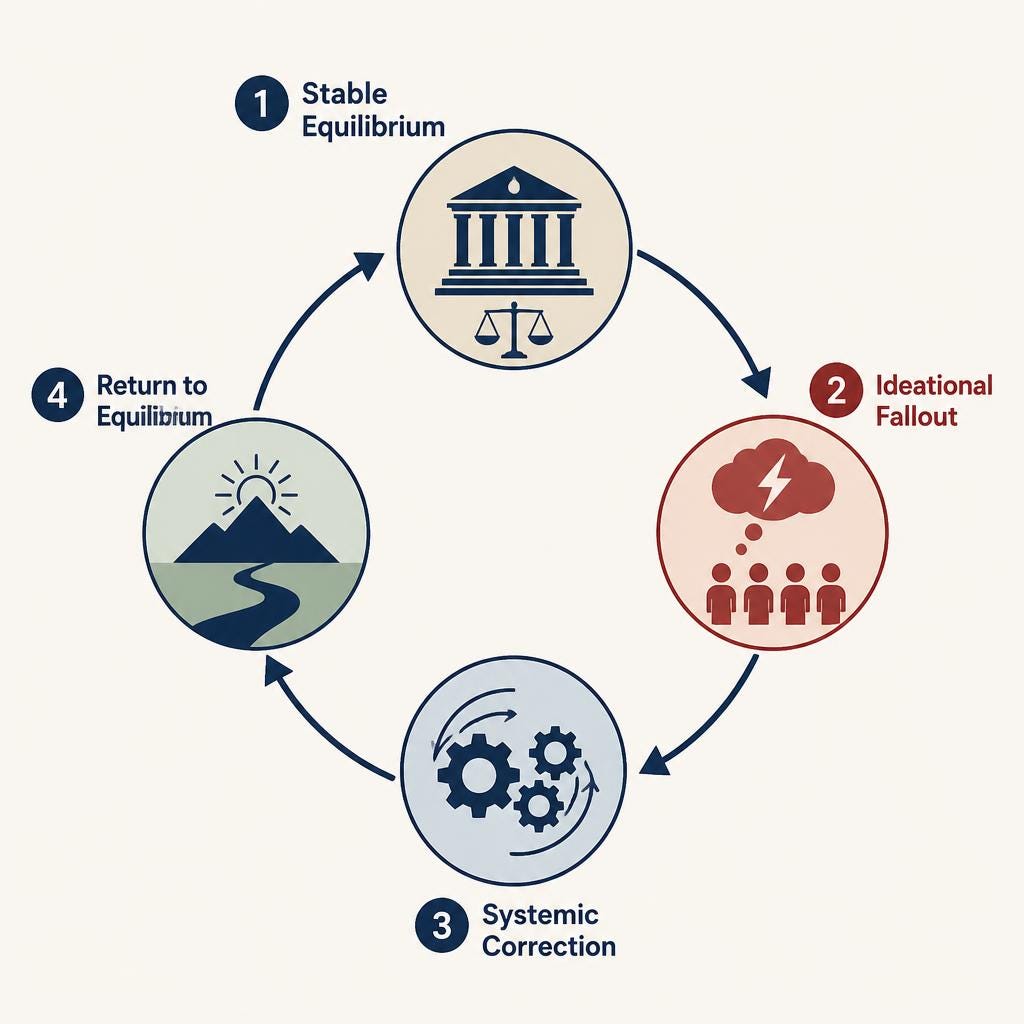
Every generation or two, a population starts drifting away from the script it was handed. Nobody plans this, it builds up slowly, out of ordinary life: a generation ends up more educated than the one before it, less violent than the one before it (violent crime is down by half since the nineties), and then finds that the deal it was promised growing up — marriage, a mortgage, a career ladder, a retirement — has quietly stopped being available.
What happens next is ideation fallout. People stop doing the things the economy needed them to do, and only later do they find words for why: polyamory instead of marriage, socialism instead of the ownership dream, quitting their job instead of climbing the ladder. The steady paychecks, steady households, and steady spending that used to prop the whole thing up start to thin out, and the system sitting on top of them starts to feel it.
That’s the point where Palintation kicks in.
The mechanism
Certain behaviors are economically load-bearing: marriage, homeownership, steady jobs, routine spending, the boring daily stuff like car insurance premiums and grocery runs. Take away enough people doing these things and the economy loses its footing, because it was quietly built to depend on millions of individual choices that used to be obviously in everyone’s interest to make.
So when the drift gets bad enough, something pushes back. The state doesn’t need to believe in marriage or ownership as moral goods to want people doing them again — it just needs the tax base and the consumer spending they generate. The correction shows up less like a policy and more like a mood: magazines start running pieces about the loneliness epidemic, sitcoms quietly go back to nuclear families, legislation nudges homeownership incentives, and a government that leans conservative usually ends up in charge of steering it, since conservative politics tends to be the natural vehicle for restoring an old equilibrium.
People go back to the old pattern. Usually not because anyone convinced them the old pattern was good, but because the alternative got made expensive, unstable, or socially embarrassing enough that going back became the easier option. And almost nobody involved experiences it as engineered. It just feels like things returning to normal.
Drift, then the cajoled return back- by force or psyop if necessary. After all, the American economy is so large and much more important to high ups than the quality of YOUR life… That’s Palintation.
Etymology
The word comes from Greek palin (”again,” “back”) crossed with the shape of plantation, which already has the right undertone built in: rows of things grown on purpose, in the same pattern, for somebody else’s benefit, dressed up as natural order. Palintation is a replanting. The field gets tilled and sown again with last generation’s crop, not because the crop is sacred, but because the harvest depends on it.
Definition
Palintation (n.) — A systemic correction that pushes a population back toward its economically load-bearing behaviors (marriage, homeownership, steady employment, routine consumption) after it has drifted away from them. The drift itself is ideational fallout: alternative ways of living, like polyamory, socialism, or disaffiliation, that spread once the on-ramps to conventional life become predatory or out of reach. The correction runs through media, policy, and cultural pressure rather than force, usually under a conservative government, and it works precisely because the population experiences its own return as natural rather than orchestrated. The state doesn’t need to believe the old order is good. It just needs the old order to keep holding weight.