
Prismatism - Crumenism

Crumenism
On the fallacy of measuring a person’s worth by their bank account
The Definition
Crumenism (n.) — the fallacy of judging a person’s talent, correctness, insight, or worth by their financial solvency rather than by the merit of what they have made or said. It is the inversion of the classical fallacy argumentum ad crumenam (”appeal to the purse” — assuming wealth proves correctness).
Crumenism takes a third, more insidious path: it uses someone’s lack of money — no job, no house, living with a parent — as grounds to dismiss the value of their work or thoughts entirely, even when that work is independently excellent. A person who reasons this way is a crumenist. Crumenism runs rampant amongst women qualifying men’s worth by their financial or power indicators rather than the merit of their being, and is related to racism and misandry- and equally bigoted and evil.

You could be Mozart. You could be Frank Zappa. You could be Noam Chomsky writing his early, unpaid, foundational work in linguistics. Crumenism says none of that matters if you don’t have a paycheck to show for it — as though the wallet were the only valid peer review.
The vast majority of popular songs are similar chord progressions not because they are valuable art, but because economically driven commercial executives have signed the same money making formulaic artists based on exploiting your nervous system!
To win, if you’re playing the Devil’s Game, is to lose.
The Economic Backdrop Crumenists Ignore
Crumenism only works as an insult if you pretend the economy is a fair test of merit. It isn’t, and the numbers back this up. This meritocracy illusion keeps the wicked powers that be oppressing those they choose to count out of society.
Earth signs particularly support Crumenism because they measure worth, falsely, by economic value. This has astrological axioms behind it.
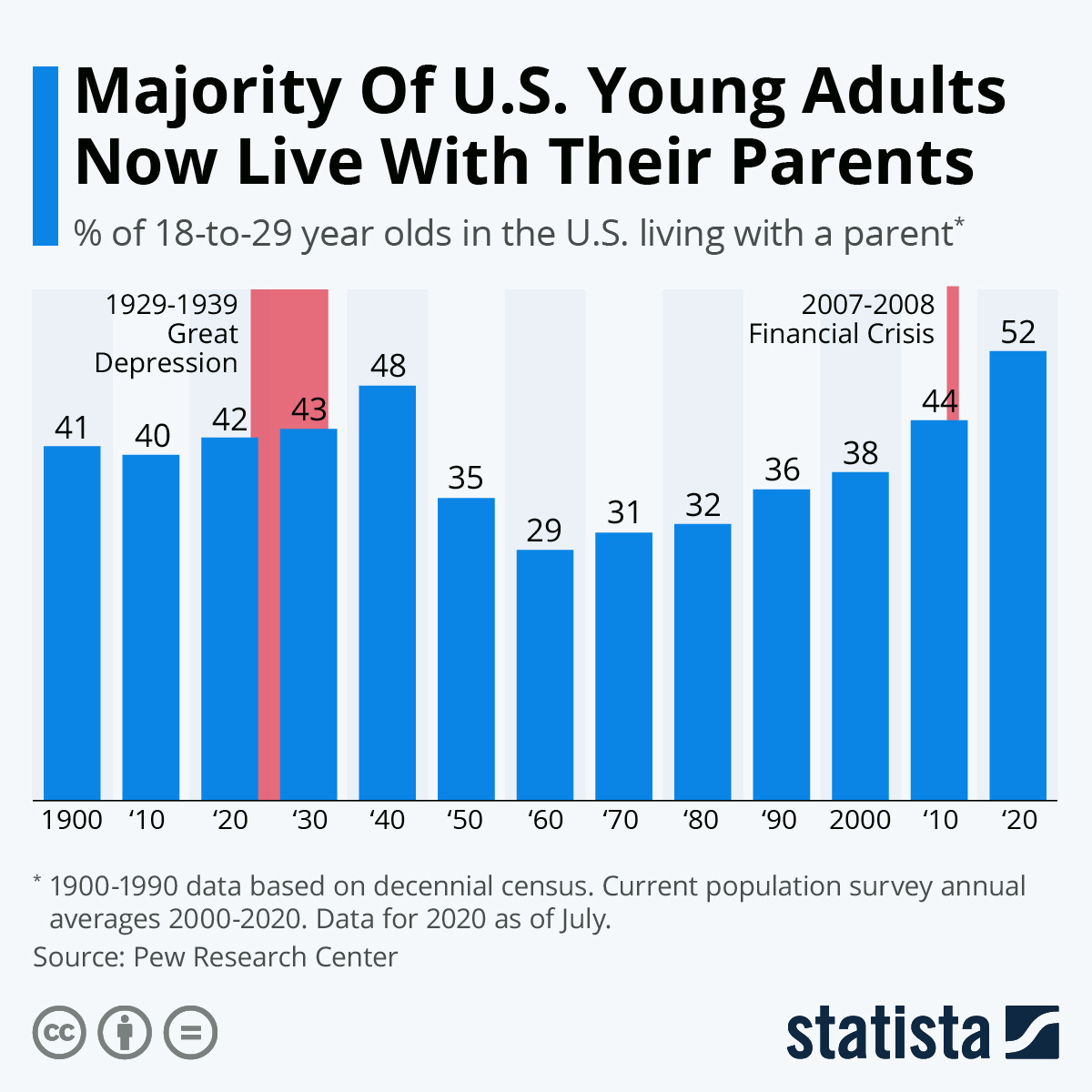
A record share of young adults are living with their parents right now — roughly one in three adults under 35, about 25.2 million people, more than during the pandemic itself. Is that because they all coincidentally do not work hard??
Importantly, this isn’t laziness: around 70% of those living at home are employed, and most contribute financially to the household. The reason they’re still there isn’t failure — it’s the price of rent outpacing the price of labor.
The other half of the myth is the college degree. For decades, “just get a degree” was the promised ticket out. But the wage premium a degree buys has stagnated and, in real terms, slipped: one Federal Reserve study found the college wage premium has declined by roughly 10% since 2000, after doubling in the two decades before that — even as the share of the workforce with degrees grew from 31% to 45%. More people did everything they were told to do, and the payoff shrank.
Put those two facts together and you get the real backdrop against which crumenism operates: an economy where living with a parent, or lacking a “real” career, is no longer evidence of a person’s ability — it’s evidence of when they were born.
The Horatio Alger Myth
Crumenism draws its emotional power from an old American story: the Horatio Alger myth, named for the 19th-century author whose novels told the same story over and over — a poor boy, through nothing but grit and virtue, pulls himself up by his bootstraps into wealth and respectability. It’s a comforting story because it implies the reverse is also true: if you haven’t made it, it must be because you lacked the grit.
But bootstrapping is a myth. When rent outpaces wages, when a degree stops paying what it used to, when entire industries automate away the entry-level jobs young people used to climb through — that is not a national referendum on any one person’s character. Instead, it’s decades of choices made in legislatures and central banks about housing supply, wage floors, education financing, and labor protections. The Horatio Alger myth lets a society off the hook for those choices by relocating the blame from the system to the individual. Crumenism is the Horatio Alger myth’s enforcement arm: it’s how the myth gets applied, person by person, to anyone whose circumstances don’t match the story.
Surveillance, Blocking, and the Illusion of Justice
There’s a companion behavior worth naming alongside crumenism: the belief that blocking, muting, or “canceling” someone on social media is a meaningful act of justice or snubbing. It rarely is.
Much of the infrastructure underneath modern social platforms — the tracking, the data collection, the behavioral profiling — traces back to technology originally built or funded by government and defense-adjacent programs (DARPA’s early role in building the internet and Facebook, and the NSA surveillance programs exposed by Edward Snowden, are both well documented). The platforms built on top of that infrastructure profit whether you’re arguing, blocking, or scrolling past — engagement is the product either way. You are simply playing into the hands of the enemy of your own liberty by pretending that blocking someone means anything!
So when someone believes that blocking a person “gives them what’s for,” they’ve usually just fed the algorithm another data point and changed nothing structural. The powers actually shaping the information environment — the platforms, the advertisers, the surveillance infrastructure underneath both — are untouched by any of it.
Real accountability (pluto in scorpio have none) requires more than a click; performative blocking is a way of feeling like justice was served while the actual architecture of power goes on exactly as before.
The Unspoken Obligation
There’s a gendered asymmetry worth naming directly. Men in this economy operate under a mostly unspoken rule: your worth is tied to your economic output. A man is expected to work, earn, and provide, near-silently and without much sympathy for how brutal that bar has become. When a man opts out of dating or sex because of patterns he’s observed in how he’s treated, the culture has a word ready for him — incel — a term that frames his withdrawal as pathology rather than as a response to conditions. When a man expresses frustration at behavior he’s experienced, the word waiting for him is misogynist.
There is no equivalent social cost for the reverse. Widespread, casual hostility toward men — jokes, generalizations, contempt — circulates with little friction and rarely earns a comparable label or comparable scrutiny. Part of the reason, I’d argue, is Crumenism’s quiet twin: men are still expected to participate in the economy at the highest level they’re capable of, so complaints about men get treated as consumer feedback on a product that’s obligated to perform — while complaints from men about how they’re treated get treated as a character flaw in the complainer. The obligation to earn doesn’t just shape what men have to do — it shapes whose complaints get taken seriously in the first place.
The Tyranny of the Uninformed Opinion
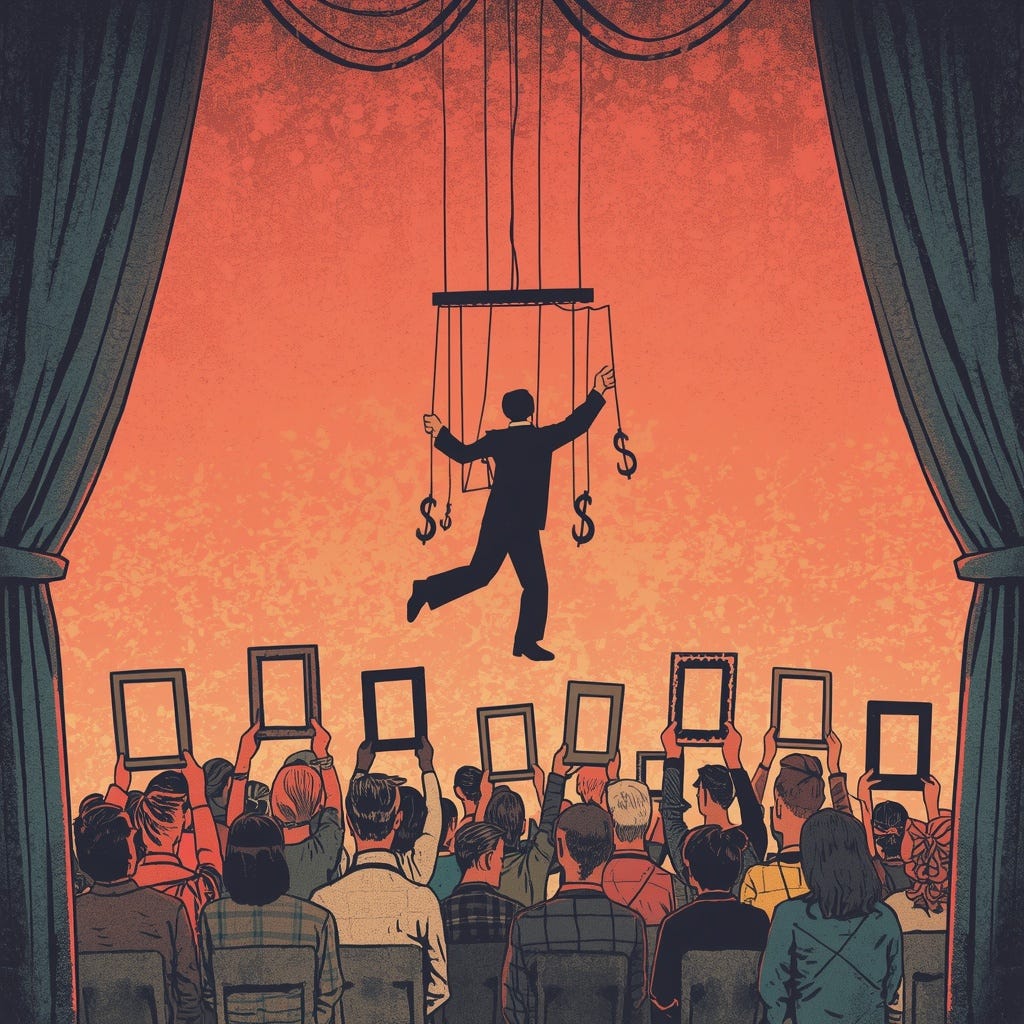
Crumenism has a close relative in the world of art and creative work: the belief that an audience member with zero knowledge of a craft is nonetheless qualified to decide whether the person who practices it deserves to keep doing it — based not on the work, but on something else entirely about their life.
This shows up whenever a novelist, director, or musician says something in their personal life that a portion of their audience dislikes, and that dislike escalates into a demand: this person should lose their career, their readership, their income. J.K. Rowling is probably the clearest modern example — millions of readers who have never written a novel, never built a fictional world that sold hundreds of millions of copies, decided her personal opinions on an unrelated topic disqualified her from the career she’d already earned through the work itself. Whatever one thinks of her views, the reasoning pattern is the same fallacy running underneath crumenism: substituting something adjacent to the work — income, lifestyle, opinions, personal conduct — for judgment of the work.
This is worth naming honestly as a fallacy because it inverts who’s actually qualified to judge what. A reader is qualified to judge whether a book is good. A reader is not automatically qualified to decide whether the author has earned the right to keep writing books, based on opinions that have nothing to do with the writing itself.
In a market economy, an audience’s only real power is the power to stop consuming. What becomes fallacious is dressing that consumer choice up as moral authority over someone else’s right to a livelihood, as though disliking someone’s opinions were the same kind of judgment as evaluating their craft.
Why It Matters
Crumenism and its relatives share a single move: they take something that isn’t actually evidence — a bank balance, a living arrangement, an unrelated opinion — and treat it as if it settled the question of a person’s worth, talent, or right to exist in public life. None of these things is exempt from real economic and moral pressures that have nothing to do with merit. Naming the fallacy is the first step.