
Prismatism - Cassandracide

Cassandracide
A word for the oldest, most expensive habit in human belief
There is a phenomenon we’ve all watched happen, over and over, in politics, in relationships, in institutions, in history — and yet it has no name. This is an attempt to give it one.
The Definition
Cassandracide (n.) — from Cassandra, the Trojan priestess cursed to speak true prophecies that no one believed, + -cide, denoting a killing or destruction.
Cassandracide names the social act of destroying a true claim not through argument or evidence, but through motivated dismissal — rejecting a warning because accepting it would conflict with what the listener wants, believes, or needs to be true.
The pattern unfolds in four stages:
A knowledgeable, aware, informed person states X.
A second party dismisses X — not on its merits, but because X threatens their desire, identity, or belief. The dismissal often comes wrapped in an attack on the speaker’s character or loyalty.
Time passes, and X is vindicated by events.
The dismisser offers no correction, no acknowledgment, and no revision of the confidence that led them to dismiss X in the first place.
The “cide” is not literal murder — it’s the killing of a true idea’s reception: the strangling of a correct claim in its cradle by people who had the power to listen and chose not to.
What makes Cassandracide distinct from ordinary being-wrong is that fourth stage — the absence of accountability.
Being wrong and later correcting course is just human error. Cassandracide is the refusal to let being-wrong touch one’s self-concept at all. The dismisser walks away from their own falsified prediction with undiminished certainty, ready to repeat the identical move the next time a true claim threatens the next belief. In this framework, Cassandracide functions less as an isolated event and more as a recurring social mechanism — a way that groups protect a shared belief or identity by sacrificing accurate but unwelcome voices, over and over, without ever paying the cost of having been wrong.
The person who does this repeatedly, without ever updating, is a Cassandreneir — someone who reloads full confidence for the next round regardless of how the last one ended.
Why It Happens: The Refusal of Curiosity
The mechanism underneath Cassandracide is almost always the same: a refusal of curiosity. The dismisser isn’t evaluating X and finding it wanting — they’re refusing to even look at it, because looking would mean entertaining a perspective that threatens their identity, their tribe, or their comfort. This is why Cassandracide so often travels with a kind of bigotry — not always racial or ethnic, but a bigotry of certainty, an unwillingness to imagine that people outside one’s own belief system might see something true.
In the run-up to the Iraq and Afghanistan wars, the people raising early, informed objections — including so-called “conspiracy theorists” whose specific theories may have been wrong but whose underlying skepticism of the official narrative was directionally sound — were not argued with. They were branded traitors, sympathizers, un-American. Had their perspective simply been heard rather than dismissed on identity grounds, the country might have avoided trillions of dollars in spending and hundreds of thousands of lives lost across two decades of war. That is the real cost of Cassandracide: it isn’t just that a prophet goes unheeded — it’s that the refusal to be curious becomes, materially, one of the most expensive habits a society can have.

An Example
In 2001, imagine someone informed and unbiased says: the War on Terror will become a serious, long-term, destructive deficit for the United States — call this claim X.
In response, a chorus of jingoistic nationalists says Y: if you don’t support this war, you’re un-American — you want the terrorists to come here and kill us.
Twenty years pass. The war costs trillions of dollars. American lives are lost by the thousands. The Taliban retakes Afghanistan anyway. X was right. Y was wrong.
But the people who said Y never come back and say, “I was wrong then, so maybe I should be more careful this time.” They say, instead, “I’m right this time,” with the same certainty they had the last time — the time they were wrong. No accounting. No update. No cost. That is Cassandracide in its purest form.
A society, a family, or a belief system that habitually commits Cassandracide is one that will keep paying for the same mistake, indefinitely, because the people responsible for the mistake are never made to feel its fallout. They are never corrected — not because they can’t be, but because correction was never demanded of them in the first place.
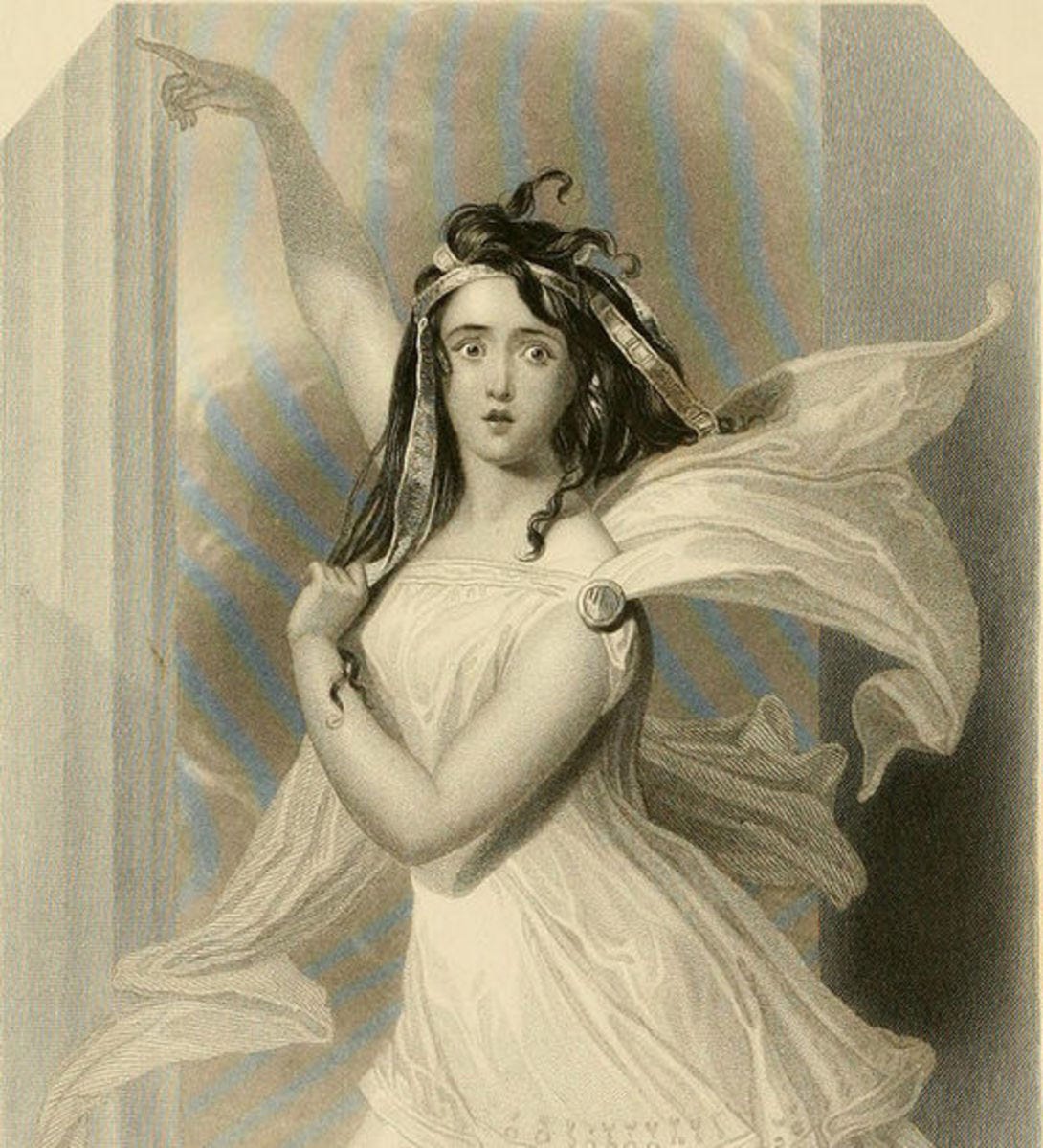
To resist Cassandracide is simply to ask, before dismissing an uncomfortable claim: am I rejecting this because it’s wrong, or because I don’t want it to be right?